

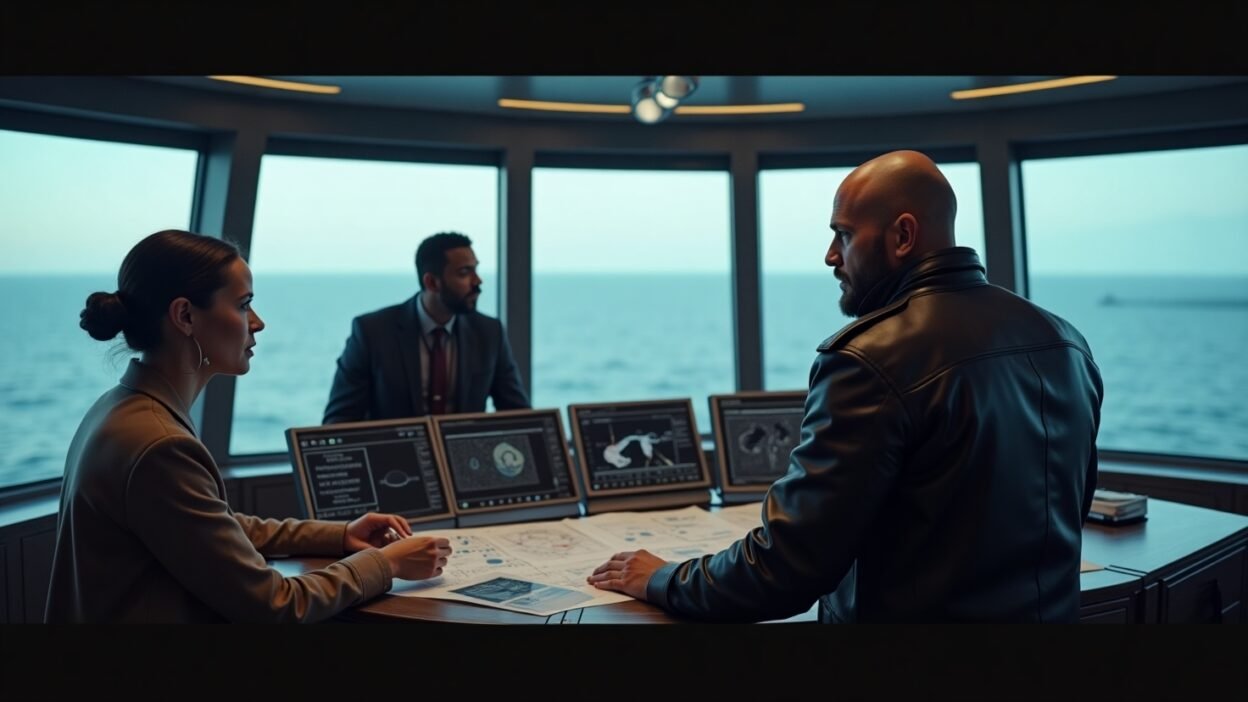
The Role of AI in Maritime Safety: Revolutionizing Navigation and Innovation
Introduction
Artificial Intelligence (AI) is increasingly becoming an indispensable component of the maritime industry, primarily due to its significant contributions to enhancing safety protocols. With the integration of AI in maritime operations, there is a marked improvement in navigation systems and decision-making processes. This transformation is not only crucial for safeguarding the lives of people but also for preventing environmental disasters in our oceans. The vast capabilities of AI—ranging from predictive analytics to real-time decision support systems—are reshaping the way maritime safety is envisioned, making it more robust and reliable than ever.
Background
Traditionally, maritime safety has heavily relied on manual processes and the astuteness of seasoned mariners. Over the years, the evolution of technology heralded the introduction of sophisticated navigational tools, but significant gaps still remained. The introduction of systems like the Advanced Pilot Assistance System (APAS), deployed on vessels such as CB Pacific, demonstrates a paradigm shift. Mythos AI’s APAS leverages a radar-first approach, effectively enhancing situational awareness and reducing cognitive load on the crew. This integration signifies a move towards a more data-driven approach in maritime navigation, where technology aids rather than replaces human judgment. This historical journey from basic compasses to cutting-edge radar systems reflects the relentless pursuit of safety in maritime history source.
Trend
There’s a clear upward trend in the adoption of AI navigation technologies, underscoring their increasing importance in maritime safety. The advent of autonomous ships symbolizes a revolutionary shift in maritime technology, blending traditional practices with modern innovations. Recent statistics underscore this trend; the global market for AI in the maritime sector is poised to grow substantially, driven by the twin imperatives of safety and efficiency. As these autonomous warriors of the seas become more common, their operations rely heavily on the suite of AI technologies available source. For instance, much like a self-driving car that must navigate the intricacies of urban traffic, autonomous ships navigate the high seas using AI-powered insights, ensuring safer and more efficient travel.
Insight
Operational testing of the APAS with CB Tankers has provided invaluable insights into its real-world efficacy. Collaborations with lomarlabs have enabled testing in real-time operations, highlighting the system’s potential in everyday maritime scenarios. Industry experts like Geoff Douglass, CEO of Mythos AI, and Stylianos Papageorgiou emphasize the role of AI not as a replacement but as an enhancer of human capabilities. Douglass notes, \”Our goal isn’t to replace the crew. It’s to equip them with next-generation capabilities.\” This perspective champions a future where AI augments the mariner’s skillset, driving a more proactive and informed approach to maritime safety.
Forecast
As we look to the future, the sky—or rather, the sea—is the limit for AI-driven maritime safety innovations. The continuous refinement of AI technologies promises to bring forth new solutions that could redefine maritime operations. However, this future is not without its challenges. Regulatory frameworks will need to evolve to accommodate the rise of autonomous ships and AI navigation systems, ensuring compliance and safety are not compromised. The vision is clear: a maritime world where AI is the standard, providing an unprecedented level of safety and efficiency. The journey towards this future requires careful navigation of technological advancements, regulatory landscapes, and operational integrations.
Call to Action
As the maritime industry sails into an AI-driven future, staying informed about the latest advancements in maritime safety is crucial. Readers are encouraged to subscribe to newsletters and explore more articles on maritime technology and safety innovations to keep abreast of these transformative changes. The era of AI in maritime safety is just beginning, and its implications will continue to ripple across the globe.
_For further insights and updates on AI navigation and maritime safety, readers can delve into related articles such as Mythos AI’s APAS deployment._
By embracing AI technologies, the maritime industry stands on the brink of a significant transformation that promises to make our oceans safer and more navigable for generations to come.